


Description
What is Cardarine?
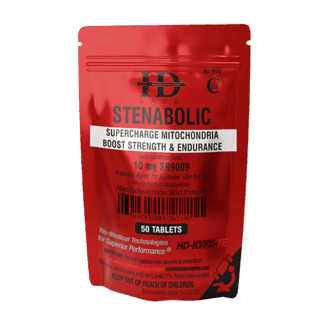
Cardarine, also referred to as GW501516, is a synthetic compound that serves as a metabolic modulator.
People often think it’s a type of compound called a SARM (selective androgen receptor modulator), but Cardarine actually belongs to a class of drugs called peroxisome proliferator-activated receptor (PPAR) agonists.
The cell receptors these affect are most abundant in muscle cells throughout the body.
Compounds such as Cardarine act upon energy metabolism in the cells and are thought to increase energy expenditure.
This is why some athletes and bodybuilders are attracted to taking Cardarine. They may take it in hopes of increasing fat-burning, getting a leaner body composition, and increasing their sport performance.
History
Cardarine was originally discovered in the early 1990s during a research collaboration between two large pharmaceutical companies.
Throughout the early 2000s, numerous studies were completed to determine the compound’s effects.
Researchers studied it almost exclusively in animals, with the exception of a few human studies.
The initial proposed use was for the treatment of hyperlipidemia (elevated fats in the blood), though later studies looked at its effectiveness for treating obesity, diabetes, and cardiovascular disease.
While some initial research seemed promising, later studies in animals revealed that the drug caused cancer to develop rapidly in various organs. This caused research to be halted.
Purported benefits
Researchers have suggested Cardarine may provide a number of health and performance-enhancing benefits.
Keep in mind that the majority of studies on the drug were in animals, so these results may not apply to humans.
Weight loss
Two major purported benefits of taking Cardarine are weight loss and fat loss.
In theory, it may be able to increase fat burning capacity. This may be because the drug serves as a metabolic modulator by targeting a part of the cell that handles energy metabolism.
Initial studies on Cardarine looked at its potential as a treatment for obesity.
An older study in mice found that Cardarine increased fatty acid oxidation resulting in less fat storage, reducing the incidence of obesity in mice given a high-calorie diet (2Trusted Source).
Researchers later suggested that Cardarine may stimulate PPAR in a similar way to exercise, so that taking it might mimic the effect of exercise in the body (3Trusted Source, 4Trusted Source, 5Trusted Source, 6Trusted Source).
If that were the case, it would mean people could use Cardarine to get some of the benefits of exercising without actually needing to exercise.
Unfortunately, while it sounds promising in theory, there are no high quality, long-term human studies to back this up.
Benefits for those with diabetes
Researchers also investigated Cardarine for the prevention of type 2 diabetes, a condition in which the body becomes resistant to insulin and thereby unable to efficiently process carbohydrates.
A more recent rodent study looked at the effect of using Cardarine on gestational diabetes, a condition in which pregnant people experience high blood sugar (7Trusted Source).
They found that rats with gestational diabetes treated with Cardarine had improvements in blood glucose and insulin levels, and less damage to their islet cells, the cells in the pancreas that produce insulin.
Lastly, one study actually found that Cardarine may help accelerate the healing of diabetic wounds, which people with advanced diabetes often develop due to a reduction in blood flow to certain body parts (8Trusted Source).
As you can see, most of the research in this area is in animals. Thus, even though the outcomes showed potential, they cannot be applied to humans and more research is needed.
May improve blood fat levels
Among the initial theorized uses for Cardarine was to improve blood lipid levels, which include your levels of the fats known as cholesterol and triglycerides.
It’s well documented in older research that a link exists between the PPAR pathway and fat burning (9Trusted Source, 10Trusted Source, 11Trusted Source, 12Trusted Source).
That said, only a limited number of studies have suggested that drugs such as Cardarine may affect fats in the blood.
One such human study from 2007 took a small group of 24 healthy volunteers and gave them either a placebo, 2.5 mg of Cardarine, or 10 mg of Cardarine per day over a 2-week period (13Trusted Source).
They found that the groups that received Cardarine experienced an increase in HDL (good) cholesterol, and a reduction in blood triglycerides.
While these results are promising, this study design has not been replicated on a larger, long-term scale, thus recommendations cannot be made.
Sports performance
One of the more prominent uses people have suggested for Cardarine is to improve sports performance.
Due to Cardarine’s potential role in fat burning, some athletes consider using it to get a leaner physique as well as improve their energy metabolism and cardiovascular performance.
Some users claim that it boosts stamina, endurance, workout capacity, and fat loss within a few days.
That said, these claims lack reliable research backing, with only a limited number of animal studies available.
In one such study from 2015, researchers looked at the effect of Cardarine use on the endurance running performance of mice (14Trusted Source).
They found that mice that had been given Cardarine experienced improvements in exhaustive running performance.
No human studies support the use of Cardarine for boosting stamina, workout capacity, or fat loss.
Despite the lack of research, athletes are sometimes willing to try unusual methods to squeeze out even a small improvement in their performance.
However, in the case of Cardarine, the potentially severe side effects appear to outweigh any benefits.
Side effects
A major concern surrounding Cardarine is the potential side effects associated with its use.
In the early days of its discovery, research determined that Cardarine could cause cancer to rapidly develop in mice and rats if taken in doses of 1.4 mg per pound (3 mg per kilogram) of body weight per day (15).
At this point, large pharmaceutical companies, which had previously funded the research, discontinued further studies on the drug.
It’s important to note that this is a relatively large dose compared with doses that have been tested in humans.
Considering the limited amount of research in humans, the extent of this and other side effects remains largely unknown among humans, making it quite risky to use Cardarine.
How much to take
Considering the lack of consistent human data on Cardarine, as well as the questionable side effects, it’s difficult to determine a proper dose.
In the limited human studies, participants received 2.5–10 mg of Cardarine with no significant adverse effects. However, these studies have not been replicated, so more research is needed to verify these findings (13Trusted Source, 16).
Due to the lack of extensive research and unreliable sourcing, Cardarine use is not recommended.
Is it legal to buy in South Africa?
It is not a SAHPRA-registered medicine. All three actives fall under South Africa’s medicines-scheduling framework, and Ignite Muscles supplies it for research and educational purposes only. Any personal use should be discussed with a registered SA practitioner.






Reviews
There are no reviews yet.